
Most side effects show up during the visit and ease as the drug wears off. The serious risks are the reason screening comes first.
Table of Contents
- Is IM Ketamine Safe? The Short Answer
- Side Effects During a Session
- The Blood Pressure Question
- What Dissociation Feels Like
- Who Should Avoid Ketamine
- Risks That Come With Repeated Use
- Medications and Interactions
- Why the Setting Matters
- FAQs About IM Ketamine Side Effects
People considering ketamine usually arrive with two worries. One is what it will feel like. The other is whether it is dangerous.
Both deserve straight answers. Ketamine has real side effects and a few serious risks, and it is not suitable for everyone. In a monitored medical setting, with proper screening beforehand, most of what happens during a session is short-lived and manageable.
Is IM Ketamine Safe? The Short Answer
For carefully selected patients treated in a supervised setting, the published safety record for intramuscular (IM) ketamine is reassuring.
One large real-world report followed patients at US outpatient clinics over 2,532 IM treatments (Ahuja et al., BMC Psychiatry, 2022). An adverse event occurred in 2.3% of treatments. Nausea was the most common at 1.9%, and no severe adverse events were observed. Abnormal vital signs appeared in 0.16% of treatments, and all stabilized within 30 minutes.
That study had no control group, and its patients had already been screened. Its numbers describe what happens when the right people are treated the right way. They are not a promise for everyone.
Side Effects During a Session
The FDA label for Spravato, the esketamine nasal spray, gives the most detailed list from controlled trials. Its most common adverse reactions in treatment-resistant depression included:
- Dissociation
- Dizziness and vertigo
- Nausea and vomiting
- Sedation and lethargy
- Reduced sensation, or numbness
- Anxiety
- Increased blood pressure
- Headache
- Feeling drunk
Esketamine and standard ketamine are closely related, so the same effects are expected with IM ketamine, though the rates may differ.
Most of these show up during the session and ease as the drug wears off. That timing is why monitoring happens on site rather than at home.
The Blood Pressure Question
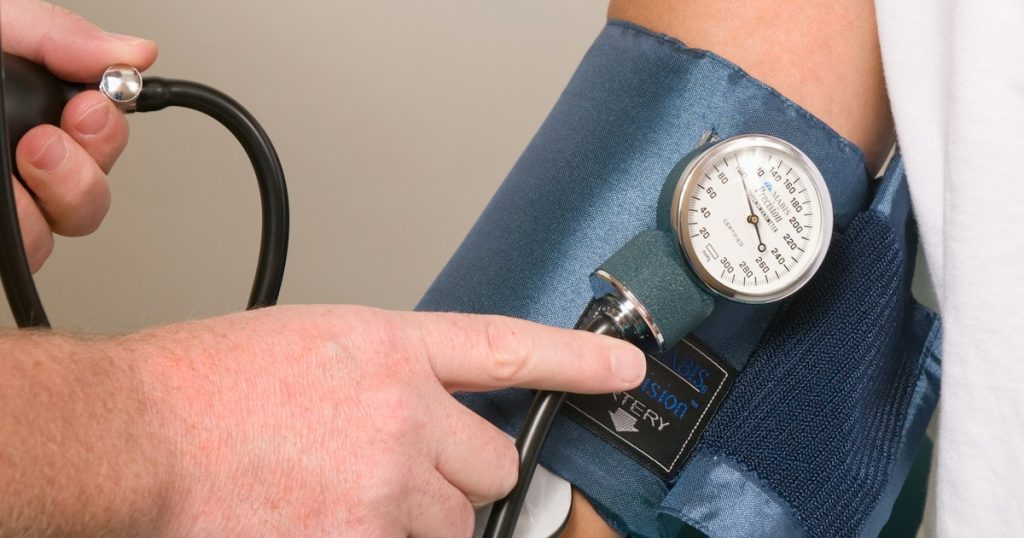
Ketamine raises blood pressure for a while. This is the side effect with the most bearing on who can be treated.
The American Psychiatric Association consensus statement describes one study of 84 patients receiving IV ketamine for depression. Blood pressure rose on average by about 20 points systolic and 13 points diastolic during treatment. Around 30% of patients briefly passed 180/100 or a heart rate of 110 at some point. There were no lasting medical complications.
For esketamine, the label says blood pressure rises peak about 40 minutes after dosing and last about 4 hours.
That is manageable in a healthy person. It is a different matter for someone whose blood vessels cannot safely take the strain. The ketamine prescribing information lists it as contraindicated in patients for whom a significant rise in blood pressure would be a serious hazard. This is why blood pressure is checked before every session and watched during it.
What Dissociation Feels Like
Dissociation is the effect people ask about most.
The FDA describes it as a disconnection between a person’s thoughts, feelings, and sense of space, time, and self. People often describe feeling detached, dreamlike, or as if watching from a distance. Some find it pleasant. Some find it unsettling, especially the first time.
The APA consensus statement calls these effects transient, and advises that the treating clinician be prepared to manage marked changes in mental state if they occur.
Clinics often keep the room quiet and dim, and the Ahuja clinics also used eye shades and calm music. The ketamine label advises keeping verbal, touch and visual stimulation low to ease reactions during recovery. It also helps to know in advance that the feeling is expected and that it ends.
Who Should Avoid Ketamine
Screening exists because a small number of conditions change the balance of risk entirely.
Conditions where a blood pressure spike is dangerous. The ketamine label names this as a contraindication. The Spravato label lists specific examples: aneurysmal vascular disease, arteriovenous malformation and a history of bleeding in the brain.
Allergy to ketamine. Known hypersensitivity to ketamine is a contraindication on both labels.
A history of psychosis. The APA consensus statement recommends that the evaluation check for psychotic disorders, and notes that the strongest evidence is in depression without psychotic features.
Current or past substance misuse. Ketamine has known abuse potential, so the evaluation asks about substance use in detail. The consensus statement encourages confirming that history with family members where possible.
Pregnancy. The Spravato label warns esketamine may cause fetal harm and advises pregnancy planning and prevention for women who could become pregnant.
Uncontrolled high blood pressure also needs attention before treatment. The Spravato label advises weighing the risk carefully when baseline blood pressure is elevated, for example above 140/90.
None of this is a do-it-yourself checklist. It is what your psychiatrist works through at the evaluation.
Risks That Come With Repeated Use
Some risks relate less to a single session and more to how often ketamine is used over time.
Bladder and urinary problems. Serious urinary complications, including cystitis, have been reported with long-term ketamine use or abuse, according to the ketamine label. In Spravato clinical studies lasting up to a year, no cases of esketamine-related interstitial cystitis were seen, though urinary symptoms were more frequent than with placebo.
Liver effects. In March 2026 the ketamine label added a warning about liver and bile duct problems with recurrent use, including medically supervised use for unapproved indications. It recommends baseline liver function tests for patients on a plan that involves repeated dosing.
Memory and thinking. The APA consensus statement links chronic, high-frequency ketamine use with possible cognitive impairment.
Misuse. The consensus statement asks clinicians to stay alert to the potential for ketamine use disorder.
The consensus statement recommends checking cognition, urinary symptoms and substance use during a course of repeated treatments. Ask your clinician how they monitor each one.
Medications and Interactions
Tell your psychiatrist about everything you take, including supplements and alcohol.
The ketamine label warns that combining it with benzodiazepines, opioid pain medication, alcohol or other sedating drugs may cause profound sedation and slowed breathing. The Spravato label adds psychostimulants, such as amphetamine and methylphenidate ADHD medications, and MAO inhibitors, both of which may push blood pressure higher.
That does not always rule treatment out. It can change the timing or the plan. Do not stop or adjust any prescription on your own to qualify for ketamine. Your psychiatrist will tell you what, if anything, needs to change.
Why the Setting Matters
The same drug carries different risks depending on where it is taken.
In October 2023 the FDA issued a compounding risk alert about compounded ketamine products sold for at-home use. It warned that using them without a health care provider monitoring for sedation, dissociation and changes in vital signs may put patients at risk of serious adverse events.
A supervised IM session addresses exactly that. Vital signs are measured before the dose, a clinician is present while the effects peak, and you leave only when you are steady. At our practice, treatment starts with a physical exam and a review of your medical history.
FAQs About IM Ketamine Side Effects
Is IM ketamine addictive? Ketamine has recognized abuse potential. In a supervised medical course, doses are measured, given only in the clinic, and paired with screening for substance use history. The APA consensus statement recommends ongoing vigilance for signs of misuse during treatment.
Will I hallucinate? Perception often changes during a session, and some people experience vivid imagery. These effects are usually temporary and pass as the drug wears off. Your clinician is there throughout.
Can I drive myself home? No. For esketamine, the FDA label says not to drive or operate machinery until the next day after a restful sleep. The same caution is sensible after IM ketamine, so arrange a ride in advance.
I have high blood pressure. Can I still have ketamine? Possibly. Well-controlled blood pressure does not automatically rule you out, but it needs assessing first. Talk to your psychiatrist, who will weigh your readings and heart health before recommending treatment.
How do side effects of IM compare with IV or Spravato? The types of effects are broadly similar across all three. Our comparison of IM ketamine, IV infusion and Spravato covers how the routes differ in dosing, monitoring and cost.
Start With an Evaluation
Whether ketamine is safe for you depends on a full picture of your health. That is what the first appointment is for. If you want to know what treatment itself looks like, read what an IM ketamine session involves.
Dr. Sambunaris & Associates provides ketamine therapy in Alpharetta, Georgia, including for PTSD.
Book My Evaluation or call (770) 817-9200.
Reviewed by Angelo Sambunaris, M.D., with more than 20 years of clinical experience and over 30 years in clinical research.
If you are having thoughts of suicide or self-harm, call or text 988 to reach the Suicide and Crisis Lifeline, available 24 hours a day.
Medical Disclaimer: This article is for general educational purposes only and is not a substitute for professional medical advice, diagnosis, or treatment. Ketamine is not FDA approved for the treatment of depression or any other psychiatric disorder, and its use for these conditions is off-label. Reading this article does not create a doctor-patient relationship. Always talk to your doctor or another qualified health provider about your own situation, and never start, stop, or change medication without speaking to your prescriber. If you think you may be having a medical emergency, call 911.